Psychological well being therapists who use AI to take notes face questions on belief : NPR


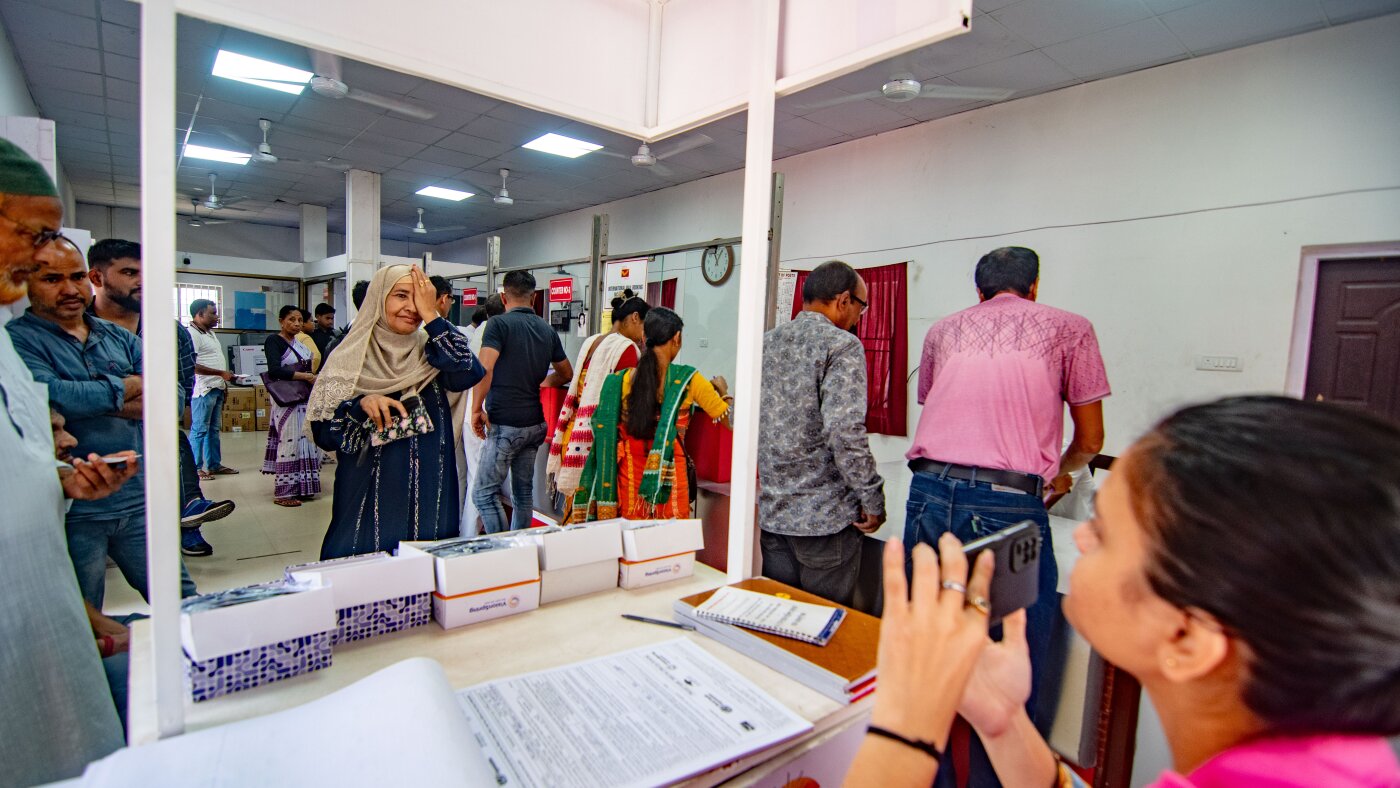
A rising variety of psychological well being therapists are utilizing AI instruments to file periods, take notes and do administrative duties.
Fiordaliso/Getty Photographs
cover caption
toggle caption
Fiordaliso/Getty Photographs
For 2 years, Molly Quinn trusted her therapist with issues she hadn’t advised anybody else.
So when her therapist talked about attempting a man-made intelligence device to take notes, Quinn did not instantly refuse. The 31-year-old librarian from Fayetteville, Ark., requested to analysis it first.
She wished to grasp the place her phrases would go — whether or not they would keep native or be processed someplace within the cloud.

Replaying the session in her head
The session moved on that day, however midway by means of, Quinn observed one thing was totally different.
“She wasn’t taking notes like she often did,” Quinn says. “The iPad was simply propped up.”
That is when Quinn realized the session was being recorded.
Quinn says she froze for a bit. However then she stored speaking.
It wasn’t till she walked out of her therapist’s workplace that the load of it landed.
“The extra I considered it, the extra I simply began getting increasingly more sick to my abdomen,” she says. “This one who I am supposed to have the ability to belief with some very personal and really intense feelings had simply utterly disregarded one thing I mentioned I used to be not comfy with. I felt utterly violated.”
She drove dwelling replaying the session in her head, not sure what to do subsequent.

Molly Quinn felt disturbed when she realized an AI device was capturing the content material of her speak remedy session.
Quinn household
cover caption
toggle caption
Quinn household
New instruments from new corporations
Throughout the U.S., a rising variety of therapists are experimenting with synthetic intelligence instruments that file periods, generate transcripts and draft medical notes routinely. Software program corporations say these instruments can save hours of administrative work every week.
One firm, Berries, markets its platform as a method to lighten paperwork so therapists can focus extra totally on their shoppers and have a greater work-life steadiness in their very own private lives.
“Berries is designed to cut back administrative burden with out interfering with the therapeutic expertise itself,” Tal Salman, the corporate’s Co-CEO, advised NPR. “It helps clinicians being extra current with their shoppers.”
When activated, the system data the dialog, transcribes it and generates a draft medical be aware for the therapist to evaluation. Therapists can edit, revise or discard the draft. They’ll additionally reserve it to a medical file.
Privateness guidelines
Salman says that audio is processed in actual time and deleted instantly, and that transcripts are saved on servers in the USA which can be compliant with HIPAA, the federal regulation that limits launch of medical info. He provides that the corporate doesn’t use remedy content material to coach its AI fashions.
“Remedy session content material stays personal and isn’t repurposed for coaching,” Salman says. “The clinician stays totally liable for affected person care and the ultimate documentation.”
Different corporations which can be providing related providers to psychological well being therapists are SimplePractice and Blueprint. Corporations usually cost charges of $19 to $99 per thirty days, interesting to solo practitioners who are sometimes overwhelmed by administrative duties.

Analysis suggests sufferers could also be open to synthetic intelligence instruments in remedy, however that consolation is restricted. A nationwide survey by YouGov discovered that Individuals stay hesitant to make use of AI for psychological well being care. Solely about 11% say they’d be open to utilizing it, and simply 8% say they belief it. Practically half of respondents mentioned they’re reluctant to make use of the expertise. Many level to the dearth of human understanding as a significant concern, together with fears about inaccurate recommendation and privateness.
These considerations prolong past remedy itself.
A separate survey from the well being analysis group KFF discovered that about 77% of Individuals are apprehensive about how their well being info can be saved and utilized by AI techniques.
Researchers say that the hole between curiosity and belief turns into much more pronounced in psychological well being care, the place conversations are deeply private. They usually be aware that even when sufferers are keen to strive the expertise, many nonetheless choose the reassurance of a human therapist.
Kellie Owens, an assistant professor of medical ethics at NYU Grossman College of Drugs, says privateness protections like HIPAA compliance don’t remove the opportunity of breaches.
“No matter what protections now we have in place, that does not imply knowledge cannot be breached,” Owens says. “There are many techniques which can be totally HIPAA compliant that also expertise main knowledge breaches.”
She says the dangers are particularly delicate in remedy, the place sufferers share deeply private info.
Significant consent?
Past the technical dangers, Owens says, written consent kinds alone might not be sufficient.
“We’ve got a large physique of analysis displaying {that a} consent kind by itself doesn’t imply an individual is making an knowledgeable selection,” she says. “Folks scroll by means of them, do not learn them or really feel pressured to agree.”
Owens says recordings ought to all the time be mentioned immediately.
“Any time you’re recording a dialog, that ought to require a verbal dialog {that a} recording is happening,” she says.
She says belief and psychological security are foundational to efficient psychological well being therapy.
“If sufferers really feel that privateness has been compromised, that may do actual harm to the therapeutic relationship,” Owens says.
For Molly Quinn, these dangers are usually not summary.
Healthcare techniques and main companies have confronted repeated knowledge breaches lately, and Quinn worries that including one other layer of expertise will increase the possibility that deeply private conversations may sometime be uncovered.
“We’ll see breaches,” she says. “Possibly not tomorrow, possibly not subsequent week. However in just a few years? I believe we will see them. And I do not need my remedy session to be a part of that.”
An AI listener, a unique expertise
For some therapists, the priority is not nearly cybersecurity.
Marisa Cohen, a {couples} and intercourse therapist in New York, says introducing AI into remedy adjustments the expertise, even when the expertise fades into the background.
“Even the presence of AI adjustments the therapeutic expertise,” Cohen says. “Shoppers know or really feel like one thing else is listening to them. That consciousness can subtly alter their disclosure.”
Remedy, she says, depends on the notion of absolute privateness.
“Whenever you introduce one thing that is being saved electronically, it raises extra questions on belief and security,” Cohen says. “It is basically a 3rd social gathering.”
Cohen additionally worries about accuracy.
“If errors are launched and a clinician is not meticulously checking the notes, that error is now a part of the file,” she says. “If these notes are ever subpoenaed, that turns into a part of somebody’s historical past.”

A boon for some therapists
Some clinicians are welcoming the expertise.
Kym Tolson, who manufacturers herself on-line as “The Touring Therapist,” has been working towards for 30 years and now runs a completely distant enterprise, seeing shoppers in Virginia whereas touring full time. She makes use of an AI recording and documentation system to handle what she describes as a heavy administrative load.
“Most clinicians spend about 10 hours every week on administrative duties, and 5 to seven of that’s documentation,” Tolson says. “With the AI system, I spend about two minutes per consumer the place it used to take me 15 to twenty.”
For therapists carrying 20 to 30 shoppers, she says, that distinction is important.
“It is given me my life again,” Tolson says. “I haven’t got notes following me round, haunting me. After I see my consumer, I evaluation the be aware, signal it and I am finished.”
Tolson says the flexibleness has allowed her to keep up a more healthy work-life steadiness and spend extra time targeted on shoppers fairly than paperwork. She says many consumers reply positively to her cellular way of life, usually asking the place she’s working from throughout periods.
Analysis in different components of healthcare suggests the time financial savings could be substantial. In a single massive evaluation of AI scribes at The Permanente Medical Group, clinicians saved the equal of almost 16,000 hours of documentation time in a single yr — roughly 1,800 workdays — and reported improved satisfaction and affected person interactions. The examine targeted on medical clinicians fairly than therapists, nevertheless it highlights the executive burden these instruments purpose to handle.


Tolson says she discusses the recording course of intimately with shoppers beforehand and makes clear that participation is elective. She additionally opinions every AI-generated be aware earlier than it turns into a part of the medical file.
“There are occasions it can hallucinate,” she says. “The clinician needs to be very cautious. It’s important to double- and triple-check.”
Whereas she acknowledges that no digital system is fully risk-free, Tolson says she feels as comfy utilizing the device as she does utilizing digital well being data.
Beginning over with a unique clinician
For Molly Quinn, the dialog about AI note-taking will all the time hint again to that November session, the one the place she realized she was being recorded with out her consent.
Afterward, she canceled her subsequent appointment.
Her therapist mentioned they may cease utilizing the device. However by then, Quinn says, one thing felt damaged within the relationship.
“The belief was gone,” she says.
Within the weeks that adopted, she started looking for somebody new. By January, she had discovered one other therapist, and from the beginning, she made it clear she didn’t need AI utilized in her periods.
The expertise did not flip her away from remedy itself, however she stays agency about her boundaries.
“That is one thing that could be a personal dialog,” Quinn says. “Tech corporations should not be within the room.”