Dinner with Yasuto Kamoshita – Everlasting Type

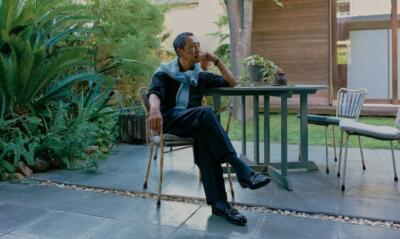
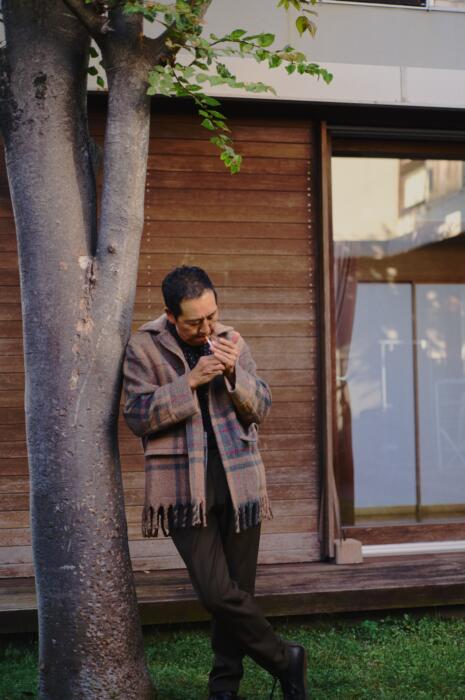
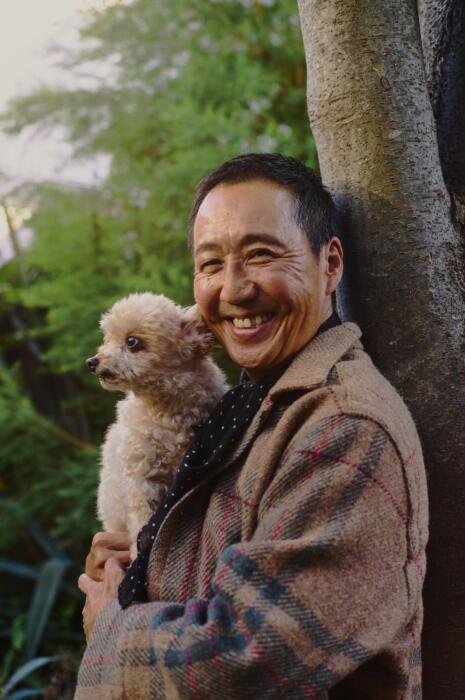
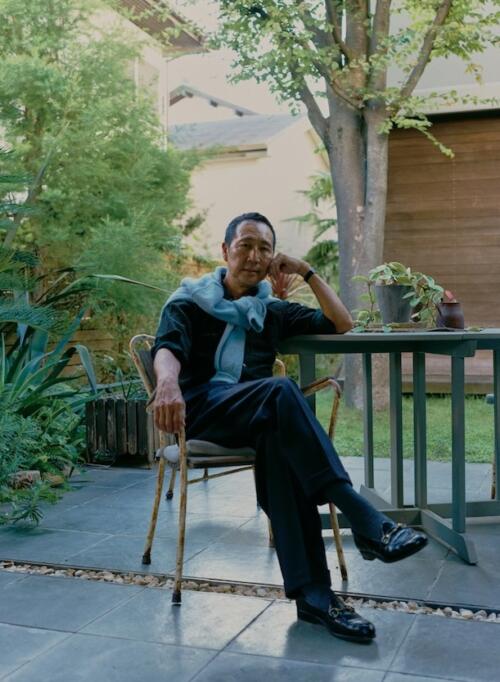
Notice: The pictures proven are largely from Kamoshita’s home in Tokyo, the place we despatched a photographer, as an instance his type and wardrobe. The interview came about on a separate event, in Milan.
After we arrived, Kamoshita-san and Hasegawa-san have been already there. Or to be extra exact, they have been throughout the road, peering by means of the window of Officina Antiquaria. “It is my favorite furnishings store,” Kamoshita mentioned. “Classic, mid-century.” By way of the window we may all see – as we peered collectively now – some low tables, a set of cupboards, a somewhat elegant leather-based recliner. Good stuff.
Kamoshita had picked the restaurant, so it should not be stunning that it was near a favorite retailer, in addition to, in truth, not far away from his resort. He is been coming to Milan for a very long time. The primary time was shopping for European manufacturers for Japanese division retailer Beams within the nineties – and there may be naturally a set of favourites.
Oh, additionally it was 37 levels. Milan had been throbbing with warmth that day, and so we did little greater than look within the window earlier than scuttling throughout the road to the restaurant. Inside Kamoshita prompt beer – just a bit glass, ice chilly – earlier than we appeared on the menu. Everybody enthusiastically agreed and after receiving that, in addition to equally chilly mineral water, we may chill out.
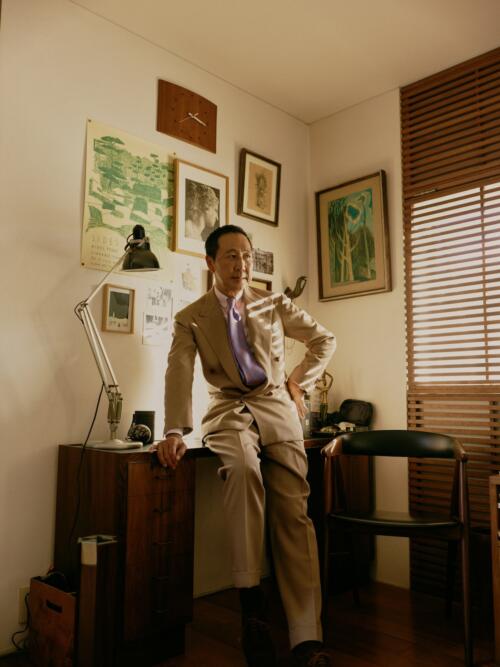
Kamoshita and color
We means 4. Myself and Lucas Nicholson from Everlasting Type, Kamoshita and Yoshimi Hasegawa sitting throughout from us. Hasegawa was there to translate: Kamoshita’s English is sweet, however like many Japanese I’ve interviewed, he prefers to talk by means of a translator. It guidelines out any doable mistake, and supplies extra pondering (or consuming) time.
Certainly, Kamoshita would give somewhat lengthy, considerate responses to every query throughout our dinner, as if he had used that additional time to mirror. For instance – I’ve all the time admired Kamoshita’s sense of color, and remembered that he studied inside ornament at college – have been the 2 probably related?
“No, I do not assume so,” mentioned Kamoshita, or somewhat Hasegawa. Luckily, we’d heard Kamoshita’s lengthy reply in Japanese, so we knew there was extra to return. It wasn’t a silly query.
“We studied the historical past of ornament and of structure, so it was not that related. However, I liked artwork and I liked artists, that was why I studied it at college, and that has all the time been an affect. Notably color, significantly artists like David Hockney. The best way he mixed colors – you can see it within the work after which in what he wore.”
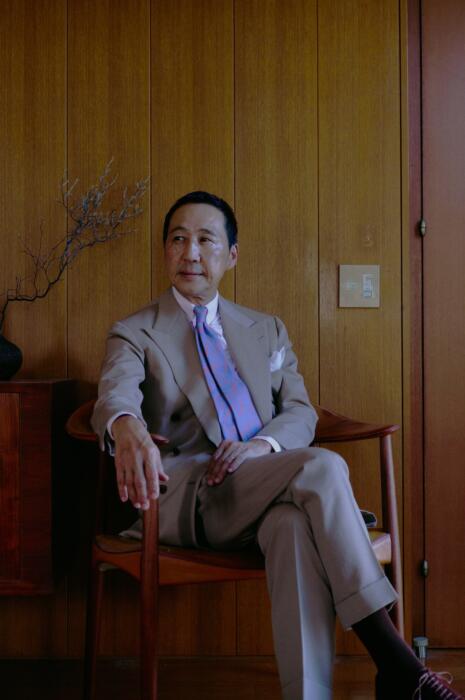
Kamoshita, by the way in which, is carrying a tan-gabardine swimsuit, with a mustard-striped shirt and a jazzy Charvet tie of pink, cream and purple. Nobody assembly him can be in any doubt that he likes a splash of color.
However, I requested, doesn’t this make it arduous to work in basic menswear, given it’s so dominated by sober tailoring, by black and blue and white?
“Sure, there has all the time been a pressure there,” Kamoshita replied. “However, I recognize the traditions of menswear and why they exist. I recognize the class of sober dressing and everybody dressing in an identical method. I recognize the respect that comes with dressing for a selected event.
Then, after a pause: “On the similar time I believe there’s a accountability for me to precise myself. As soon as you understand how to, I believe there may be simply as a lot accountability there to your self as an individual.”
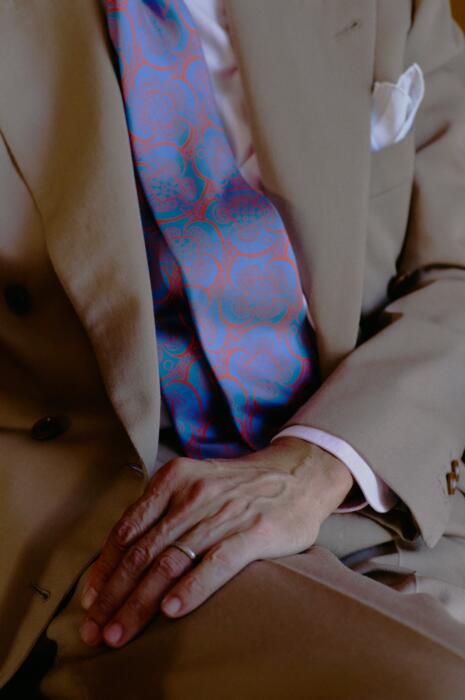
Menswear strikes with re-interpretation
I used to be whether or not a few of that zeal of color got here from Kamoshita’s love of Italian type? In spite of everything, Italian tailoring was an enormous pattern in Japan within the late nineties and early noughties, when he was build up United Arrows.
“No, not significantly. Lots of people speak about color in relation to Italian type, however I believe you see it in all places – in American Ivy type, in British type. After I was rising up American informal type was the massive pattern, and so they have their very own sturdy colors. Then it was French type, then Italian, and all the time within the background a British affect.
“Of those, essentially the most influential for me was the French, significantly their tackle Ivy type. Outlets like Hemisphere, Outdated England and Arnys. All of them have been lovely males’s outlets in Paris, all of them at the moment are sadly gone.
This, I counsel, illustrates one of many nice drivers of males’s type previously 50 years, and one usually underestimated: decoding and re-interpreting traditions. Traditional menswear can appear pretty static, however usually it’s the interpretation of 1 tradition by one other that retains it related. Like Hemisphere being a French particular person’s tackle American clothes, which then acquired re-interpreted when it got here to Japan.
“Sure, and it’s attention-grabbing being a Japanese particular person, as a result of we’re all the time final on this chain. We don’t have our personal menswear, so from the start we needed to study from others – from the Individuals, from the French. That is what makes us nice college students of different traditions, of different cultures. We wish to perceive all the pieces.
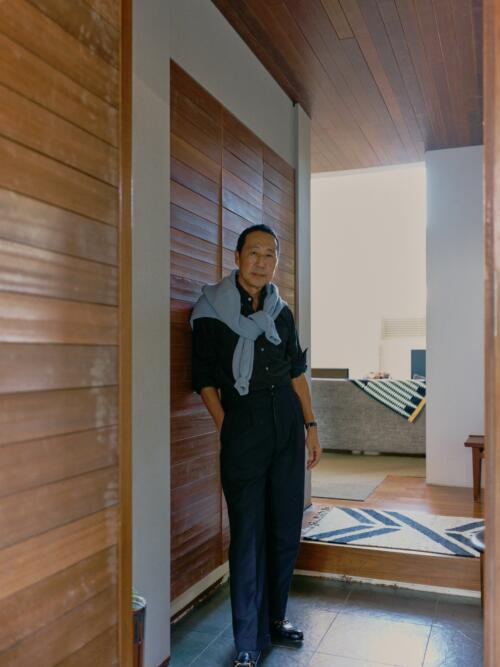
What’s Japanese type?
Then after a pause once more, that incisive extra thought: “And beneath all of it, I believe we wish to perceive what’s the greatest mixture – what’s the greatest type – for Japanese folks. At present, I believe we’ve got discovered it, I believe Japanese folks have reached that time.”
OK, so apparent query subsequent – what’s that type? Kamoshita has a type of faces that may flip from critical to smiling immediately. He’s both pondering or grinning broadly. With out wishing to be patronising, I discover it very endearing.
At my query he shrugs, his face breaks open, and he laughs. It’s infectious – all of us begin laughing.
“It is vitally tough, very tough to say.” I can see why. Ask a British particular person to explain British type and he would possibly point out a couple of particular issues – fits, ties, perhaps cricket or tennis – however he can hardly ever outline it satisfactorily. Loads of it’s unconscious; it usually takes an outsider to see it clearly.
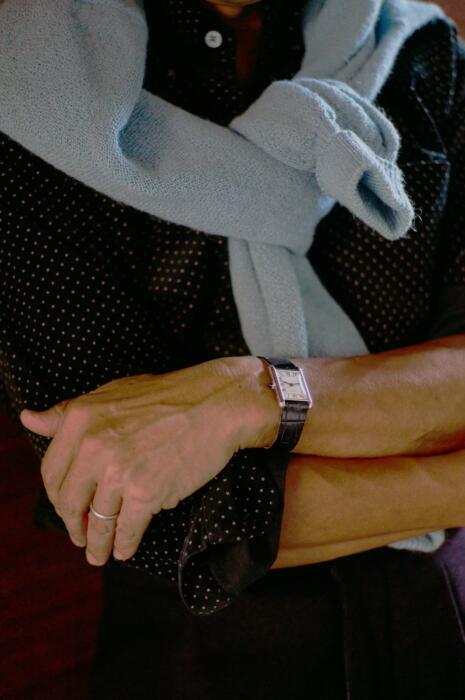
“Maybe you see it greatest within the garments themselves. For instance, this swimsuit I’m carrying is by a rising star of Japanese tailoring. However the type of it’s a mixture of English and Italian type, by means of a Japanese eye,” Kamoshita says.
“I by no means thought it will be doable to determine a Japanese type, significantly with regards to color. However folks say I’ve a selected tackle color, so maybe this Japanese type is being expressed by what I put on, what I design – it’s these on the surface which have the attitude to see that greatest and describe it.”
I assume that’s folks like me. As I discussed, I’ve all the time discovered it inspiring how Kamoshita makes use of color, and if I needed to describe it I’d say it has all of the vitality of Italian costume, with a management and precision that’s very Japanese.
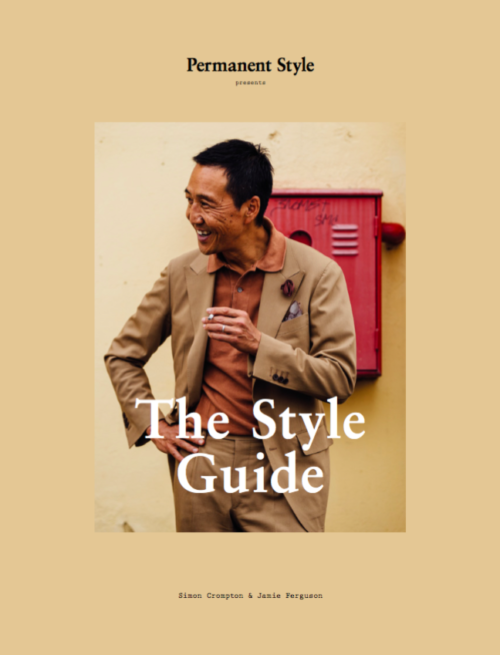
Kamoshita has appeared on the quilt of one in every of our publications earlier than, for instance – The Type Information in 2018 (beneath). In that picture he wears a tan swimsuit with a burnt orange polo shirt, equally colored boutonniere and brown/white handkerchief. It’s vibrant, but in addition restrained.
Loads of Italians I do know would mix these heat colors with a pop of yellow or of inexperienced, however the earthy tones he goes for are far more satisfying. Even the shirt and tie he’s carrying immediately are inside an identical tonal bracket.
What’s the subsequent new color?
“The best way we put on garments may be very influenced by what we see round us,” Kamoshita continues. “The environment, the buildings, the climate – and naturally the folks.
“In my case, I’ve all the time needed to be totally different from what others are carrying. It’s nonetheless very Japanese most likely, however as a result of everybody I noticed was carrying navy and gray, I needed to put on brown. Now a few years later, brown is well-liked too, so I’ve to search out one thing else!” This comment is adopted, predictably and delightfully, by a giggle.
“I’m unsure what’s the new factor for me – maybe beige. I can’t put on a purple swimsuit and there aren’t many different choices.” Maybe white, I counsel – he may turn out to be the Japanese Tom Wolfe? “I’m not so positive, a white linen swimsuit is gorgeous however I believe it really works higher on a white particular person with blond hair – Asians can’t compete with that,” he says.
Associations play a task as effectively after all. Everlasting Type contributor Manish Puri was exhibiting off a cream double-breasted linen swimsuit earlier that day (beneath) – however it appeared somewhat totally different on him, being of Indian ancestry, than it will on the very white and English Lucas or myself. Kamoshita nods sagely, simply as the principle course arrives.

Why do PS readers fear a lot?
The restaurant, Antica Trattoria Della Pesa, is without doubt one of the oldest eating places in Milan and intentionally continues an extended custom of Lombardian delicacies: ossobuco, usually with risotto, sizzling zabaglione for dessert. It has additionally scrupulously saved its previous furnishings.
There’s a lull within the dialog for a great 10 minutes whereas everybody tucks in. Point out is product of the current elections, however nothing else. Correct menswear discuss is reserved for the tip of the course.
I start by elevating some extent about that urge to decorate in a different way from others: is {that a} hindrance once you’re designing garments for different folks to purchase and put on? “Luckily no, I don’t assume so. I design what I like and wish to put on, and it has all the time labored,” he says.
“Nevertheless, it does fluctuate with the dimensions of the model you might be working for. Whether it is my previous assortment, Camoshita, then it may be extra simply what I like – but when it’s an even bigger model, it’s essential to have the broader buyer in thoughts.”
That is attention-grabbing, as a result of I really feel Everlasting Type readers all exist someplace alongside this spectrum – from people who wish to costume fairly merely and conservatively, to people who are eager to precise themselves.
This level brings a query from Kamoshita again at us: “Why do Everlasting Type readers ask about what they need to put on a lot?” he asks. “Why do they fear about it somewhat than simply doing what they need?”
It takes me some time to formulate a solution. I want I had a translator to provide me some pondering time. In the long run I say: as a result of, I believe, a whole lot of males wish to costume effectively however they don’t have the understanding of garments to do it. They don’t have the cultural inheritance of fathers or brothers or mates who wearing a sublime method, and so they haven’t spent a lot impartial time pondering or researching it.
Garments are what you eat
“However I believe most individuals know what they wish to put on – they only don’t have the boldness to do it,” argues Kamoshita, critical now. “It’s instinctive, they know what they like. Similar to consuming – you eat meals, you realize what you prefer to eat.”
I just like the metaphor, however I believe garments are totally different in no less than a method – they’re social, cultural. They impart one thing about you to everybody round you, in order that they’re extra complicated. More often than not folks don’t see what you eat.
Lucas chips in right here to increase the analogy: you may’t all the time eat what you need, like McDonald’s each day, as a result of it will make you unhealthy. In the identical method, you may’t put on precisely what you need since you stay in a society, the place totally different garments talk various things.
(It happens to me, because the dialog switches interlocutors, that that’s perhaps why so many individuals flip as much as McDonald’s in sweatpants.)
“And identical to wholesome consuming, dressing effectively requires a sure stage of schooling,” says Hasegawa.
“I agree,” nods Kamoshita. “Ever since I used to be a younger boy I used to be desirous about garments and needed to find out about them. I couldn’t perceive individuals who didn’t care. I believe immediately I’ve the identical drawback: I discover it obscure that some folks might not know easy methods to put on garments as a result of they’ve by no means thought of them – somewhat than it being a particular choice to decorate that method.”
It’s additionally a lot simpler to study once you’re an adolescent, I say. You’re studying all the pieces else, so that you take in all of it very readily, and there are not any expectations. Once you’re a 40-year-old it’s so much tougher to study and in addition to experiment, to search out your type.
“Sure – I all the time say that if you happen to by no means attempt you by no means study. That you must attempt a lot of various things. Identical with meals,” says Kamoshita.
That is true. The large drawback is that good garments are costly – making an attempt a whole lot of them takes some huge cash.
“And, it’s a motive bespoke is just not for everybody,” he says. “Not solely is it the most costly factor to experiment with, however it requires a sure stage of information and expertise since you’re shopping for one thing you may’t even see – you need to think about it.”
Hasegawa chips in once more, going again to the purpose about how a lot cash folks spend on garments: “It’s attention-grabbing to check Europe with Japan, as a result of in Japan folks spend much more cash on clothes. They could have a tiny flat and so they received’t personal a automobile, however they do spend so much on garments.
“So they could earn £30,000 a 12 months, however they’re nonetheless completely happy to purchase Yohei Fukua bespoke sneakers [which cost over £3,000]. Maybe that’s one motive the usual of costume is larger – they’re shopping for extra, and so experimenting extra.”
Are there different causes for that totally different perspective to spending cash, I ask?
“One motive I believe is that there hasn’t been any sort of class system in Japan, so folks purchase issues extra to indicate their standing. And it’s cheaper to do this with a swimsuit than it’s with a automobile.”
At this level everybody sits again, as if we’ve solved one thing knotty and profound. I’m unsure we’ve got, however it definitely made the meal go shortly. On the waiter’s suggestion, we retire exterior for dessert.

It’s all the time sneakers
It’s nonetheless steaming sizzling exterior, at 10pm. Nonetheless, with a chilly glass of wine and a bit of wind arising the road, it’s much more nice than it was through the day. I kick off with a favorite and common query: what was the most costly piece of clothes Kamoshita remembers shopping for when he was younger?
“I all the time like golf,” he says, “I’ve performed usually ever since my twenties. Again then, Jack Nicklaus was my icon, each for his golf and for what I wore. He had some actual type. Properly, I needed the identical membership as him but in addition the identical sneakers, from Johnston & Murphy. I keep in mind shopping for these sneakers and so they value me greater than my month’s wage. That’s stayed with me!”
It’s attention-grabbing, I believe sneakers are the reply to that query about three quarters of the time. There’s one thing about them that enchantment uniquely to males – like they’re an object that may be fetishised, in a method {that a} swimsuit isn’t. “For me, they’re an entire product,” says Kamoshita. “A bag is like that too – it exists by itself, with out the necessity for a shirt, tie, even an individual carrying it.”
And what does he put on to play golf immediately? “Ah, no costume, no knickerbocker!” he says. Barely disappointing – if anybody may pull off that look, with a Truthful Isle vest and a pair of saddle sneakers, he may.
Frankly, after this, the dialog turns to meals and reminiscing. The dessert menu prompts a debate as to the origin of île flottante – many foreigners assume custard-based desserts like this are English, though English folks have hardly ever heard of them. After which there may be discuss of the warmth – what’s the highest warmth and humidity folks have needed to stay by means of? Good chat, however most likely not price reporting in a characteristic on menswear.
Trousers over time
There’s a final query that prompts an attention-grabbing reply. As grappa arrives, we ask Kamoshita what he has on his wishlist, when it comes to menswear purchases. Seems, it’s a complete new set of trousers.
“It’s arduous, as a result of I’ve a whole lot of fits and trousers, however fashions have slowly modified through the years,” he says. “Most of my fits are 18cm on the hem, however now trousers are 20cm, even 22cm. I’d like to vary them however that’s usually greater than is feasible. And you’ll’t get the identical material any extra.”
He has managed to take care of the identical physique measurement through the years, so the jackets are OK. (We inform him that is very spectacular – it attracts a trademark snigger, which is all the time satisfying.) However the silhouette with the slim trousers seems flawed immediately.
We’ve a couple of options – turning them into flares with a pleasant paisley insert; including Adidas stripes all the way in which down the leg. Admittedly these should not critical – the grappa could also be beginning to take its toll.

The topic is saved by Lucas, who makes the sensible suggestion of carrying separates as an alternative. Kamoshita nods, and takes out his telephone. We’re proven an image of him carrying an previous swimsuit jacket with huge Bernard Zins trousers – naturally, he makes it work.
Lucas additionally means that the pattern will come spherical once more. “Mmm, perhaps after 20 years,” initiatives Kamoshita. “And by that point I’ll be useless!”
The picture had been taken exterior Kamoshita’s dwelling, and that’s one motive the placement was chosen for the photographs accompanying this piece. It appeared so trendy but in addition, after all, an extension of Kamoshita-san and his persona.
The night as a complete has felt like a beautiful perception into that. Not a lot about his profession, with all its twists and turns, however a couple of man reflecting on his relationship with garments and the way he sees issues immediately.
“If there may be one factor I want to do within the subsequent few years, it’s assist Japanese craftspeople – significantly tailors,” concludes Kamoshita, returning to the theme of creating a Japanese type. “There may be such expertise there, however not all the time the boldness or consciousness to create an identification. I really feel a accountability to do that any method I can.”
All I can say is, fortunate tailors.
Footnote: Biography
Yasuto Kamoshita has been one of the crucial influential figures in Japanese menswear for a few years. Born in 1957, he joined the division retailer Beams after graduating from Tama Artwork College, shifting from a salesman to a purchaser through the years. In 1989, he made waves by being a part of the crew that broke away from Beams to arrange a brand new retailer, United Arrows.
Initially meant to be its personal luxurious Japanese model, United Arrows finally grew to become a multibrand retailer too, albeit the largest within the nation. Kamoshita was a purchaser from the beginning, specializing in Europe – for a few years he hadn’t visited the US, regardless of his fondness for his or her type.
In 2007 he launched his personal line inside United Arrows, Camoshita (the ‘Okay’ being swapped for a ‘C’ to sound extra Italian, much less Japanese). At present he continues to run his personal model in addition to being a director for different manufacturers, together with Paul Stuart in Japan for instance, which has a separate assortment to the US.
All through all of it Kamoshita has been recognised for his easygoing, Ivy-influenced type and mastery of color, which have made him a mode icon fairly aside from his position within the route of those shops and his private designs.
This text was the quilt story of the Spring/Summer time ‘25 difficulty of PS journal