The model of Tintin and Hergé – Everlasting Type


By Bent Van Looy.
I might be incorrect, however I doubt many PS readers might pull off a pair of tobacco knickerbockers. God is aware of, at some perilous level in my private model journey I attempted (and failed, in fact). Come to consider it, I solely know one man who can: my good friend Tintin.
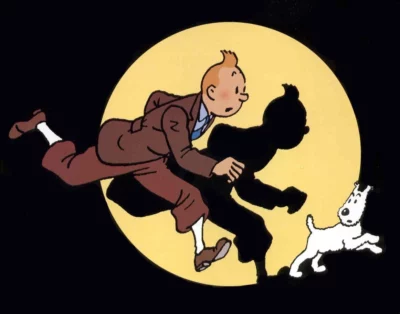
From his early travels to the USSR and America, the tirelessly optimistic reporter for Le Petit Vingtième donned a generously lower pair of turd catchers (as they’re known as in Flemish). One way or the other, he managed to make them appear like a wise garment, worn with a white shirt and a lightweight blue crewneck sweater.
Add a pair of white knee-high socks and easy brown oxfords (I think about them to be a pair of suede Aldens), and also you’ve received your self a novel and recognisable uniform.

However our hero can be recognized to modify up his inflexible gown code. I like him in The Blue Lotus, for instance, the place he stuffs a short-sleeved yellow shirt into the plus-fours (above), which, within the subsequent panel, he wears with a striped pink tie – with no jacket.
The latter is the kind of look his creator, Georges Remi, higher often called Hergé (his initials GR mentioned in reverse), might rock like no different.

Remi (above) grew up in a well-to-do Brussels bourgeois household within the early twentieth century. Like many boys in his milieu, he handed by a transparent development of gown: lengthy robes as a child, shorts and shirts as a toddler, knickerbockers in school, and bespoke tailoring thereafter.
His household’s proximity to excessive society – brushing shoulders with aristocrats and dignitaries – left an enduring mark on how Hergé dressed all through his life.
His garments aren’t loud or showy – in truth, fairly the other. I like previous pictures of the person himself at work in his studio, sporting a easy white ironed gown shirt and a clipped tie, sleeves rolled up for the duty at hand.
The selection of the tie, the clip, the belted worn-in chinos, and a discreet Swiss watch present a person who completely knew his garments. And that love and data shone by on each web page of the Tintin canon, the place each character is dressed with love and care, aside from Snowy, that’s, who – like most canines – operates within the nude.

It’s miraculous how Remi, in his attribute ligne claire model manages to speak the intricate codes of clothes with a single, flat layer of watercolour.
Examine patterns, like Tintin’s cowboy shirt in Tintin in America, are simply that, easy checks made with a ruler (above). One other artist would’ve tried to point out his mastership by letting the sample stream with the material of the shirt. Hergé, as an alternative, provides us a touch. Our thoughts does the remainder.
And, regardless of how minor the position, everyone seems to be rigorously outfitted in garments that befit their station in society – from baron to bootlegger, mobster to marine biologist.
Take crime kingpin Al Capone (under) in a double-breasted go well with, trousers pressed and tapered, sporting a bejewelled tie on a pink shirt with a white distinction collar, accompanied by a crony in a sloppier blue go well with and an ill-balanced, tiny bow tie.
There’s a world of distinction in standing there, defined by the lower and elegance of tailoring – no phrases required.


Certainly, Hergé’s love of tailoring is obvious all through the Tintin books. He drew a bunch of characters – gangsters, ambassadors, and infrequently even Tintin himself – in fits, particularly brown ones.
The omnipresence of brown tailoring on the earth of Tintin most likely has lots to do with the occasions, with most of the comics written within the Nineteen Forties and 50s.
There’s Tintin’s go well with jacket in Temple of the Solar, in the identical hue and fabric of the knickerbockers – cinched within the again to sign ruggedness and utility (above). The shirt collar and fish-mouth lapels on the jacket look very Parisian, and completely different from what contemporaries in London or New York would have worn.
Tintin largely wore brown with a white shirt and a black tie (an unfailingly traditional mixture), whereas Hergé clearly had enjoyable taking his aspect characters purchasing, combining the brown fits with shirts, ties, roll necks and scarves in a lot stronger colors.

However Hergé additionally had a eager eye for informal garments and workwear. Contemplate Captain Haddock, in his signature navy knit turtleneck sweater (under) – a glance he solely briefly ditches for overly loud tailoring in The Seven Crystal Balls (betraying that the Captain could also be out of his depth, sartorially).
And despite the fact that Tintin clearly favours his uniform, he doesn’t thoughts throwing just a few francs at top quality outerwear when the necessity arises. Earlier than going to Tibet, to comb the Himalayas looking for his misplaced good friend Chang, our hero should’ve had the presence of thoughts to go looking for a sturdy mountaineering anorak at Nigel Cabourn or Stone Island (above).
Usually rugged and undoubtedly informal, Tintin is understood to put on all types of parkas and ponchos on the proper event. And when at dwelling in Belgium, he goes for a stroll with Haddock in a cool Valstarino-style suede bomber.


And I can’t not point out the lengthy khaki raincoat Tintin wears on the duvet of King Ottokar’s Sceptre, which I wish to think about him shopping for from Cohérence (above).
It’s a well-worn, quite simple A-line mannequin, and flutters fantastically behind its wearer on his many adventures. This coat at all times made an impression on me as a child and symbolises the purpose the place well-cut tailor-made garments meet journey and dynamism.
After in search of Tintin’s raincoat for many of my life, I managed to attain an Italian coat from the 40’s that resembles it in classic store ‘Ub’ in Florence. I couldn’t consider my luck.

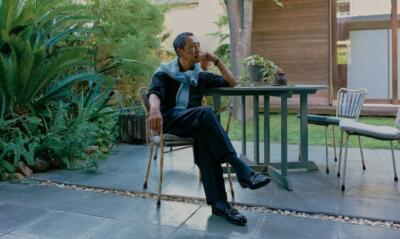
Hergé’s personal model softened over time. Although his later years had been marked by private struggles, his garments grew extra relaxed.
In pictures from his sixties, he embodies a sort of quiet luxurious: scarves and foulards substitute stiff collars, suede jackets and odd trousers take over from formal fits (above). It’s the wardrobe of a person comfy – curious, adaptable, and in line with his time.
So to, in his remaining journey revealed within the mid-Seventies, Tintin and the Picaros, our hero proves to be prone to tendencies and discards his trusty knickerbockers for a barely flared pair of slacks (under) as he stomps by the San Theodoros jungle, by no means to be seen once more.